
Planning long-term care is rarely something families do calmly or early. More often, it begins after a hospital stay, a sudden diagnosis, or the slow realisation that everyday life has quietly become harder for someone you love. In those moments, families are expected to make complex decisions quickly-while tired, emotional, and unsure of what the future holds.
In the UK, long-term care support can feel overwhelming. There are different care needs, multiple systems, unfamiliar language, and no clear roadmap that fits every family. What matters most is not just what support is available, but how it is planned, delivered, and sustained over time.
This guide is designed to help families understand how to plan long-term care thoughtfully focusing on stability, dignity, and real-life needs-while showing how Standby24 supports families through some of life’s most challenging transitions.
Understanding What Long-Term Care Really Means
Long-term care is not only about medical conditions. It’s about supporting a person to live safely, comfortably, and with dignity over an extended period of time. This could involve physical support, mental health care, behavioural support, or assistance with everyday routines that have become difficult.
For many families, long-term care becomes necessary when:
- A loved one is living with a chronic condition
- Mental health needs require ongoing support
- Learning disabilities or autism mean specialist care is essential
- Recovery after hospital discharge needs structure and continuity
The key thing to understand is that long-term care is not a “one-size-fits-all” solution. Needs change over time, and care plans must be flexible enough to change with them.

Starting the Conversation as a Family
One of the hardest parts of planning long-term care is knowing when-and how-to talk about it. These conversations can feel uncomfortable, emotional, or even frightening. But avoiding them often leads to rushed decisions later.
Families benefit from starting with honesty and listening. What does your loved one feel anxious about? What routines matter most to them? What makes them feel safe, respected, and independent?
Long-term care planning works best when it is collaborative. When individuals are involved in decisions about their own care, it builds trust and reduces resistance later on. Even when capacity is limited, understanding personal preferences remains vital.
Identifying Care Needs Clearly
Before any support can be put in place, families need clarity around care needs. This is where many people feel lost. Needs are often layered-physical health, mental wellbeing, emotional support, and practical assistance are rarely separate.
At this stage, it helps to focus on:
- Daily living needs and routines
- Emotional and psychological wellbeing
- Behavioural or communication challenges
- Risks around safety, mobility, or isolation
This is where professional guidance becomes essential. Experienced care providers can help families see the full picture-not just what is urgent today, but what may be needed months or years ahead.
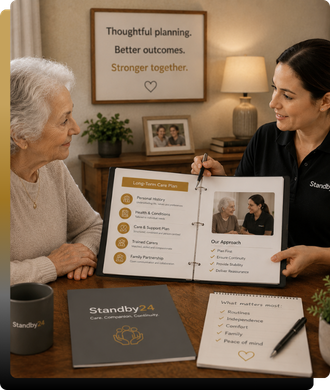
Why Planning Early Makes a Difference
Families who plan early often experience less stress and better outcomes. When care is reactive, it can feel chaotic. When care is planned, it feels supportive.
Early planning allows time to:
- Build a consistent care team
- Establish routines that feel natural
- Reduce hospital readmissions
- Support family members who are also cares
It also creates space for trust to develop-between the individual, their family, and the professionals involved in their care.
How Standby24 Supports Long-Term Care Planning
Standby24 works with families who need structured, reliable long-term care support across complex situations. Their approach goes beyond task-based care. It is rooted in understanding the person behind the needs.
Support is carefully planned to provide continuity, stability, and reassurance. This includes working closely with families, understanding individual histories, and ensuring carers are trained to support specific conditions and behaviours.
Rather than rushing into care delivery, Standby24 focuses on planning first-so support feels sustainable, not disruptive.
Supporting Mental Health and Complex Needs
Long-term care often intersects with mental health challenges. Anxiety, depression, trauma, or behavioural distress can affect not just the individual, but the whole family.
Consistent care makes a significant difference here. Familiar carers, predictable routines, and clear communication help reduce distress and build emotional safety. Families are not expected to manage this alone. Professional support brings both expertise and relief.
Planning for Transitions and Change
Care needs do not stay static. A well-planned long-term care arrangement anticipates change-whether that’s recovery, deterioration, or new challenges emerging.
Good planning considers:
- Hospital discharge and re-integration at home
- Increasing support needs over time
- Adjustments to routines and care intensity
By planning for change, families avoid repeated crises and maintain a sense of control.
The Emotional Side of Long-Term Care
It’s important to acknowledge the emotional weight families carry. Guilt, exhaustion, fear, and grief often sit quietly alongside practical decisions. Choosing long-term care is not a failure-it is an act of responsibility and care.
Families deserve support too. Having a reliable care partner can reduce burnout and allow family relationships to remain what they should be-loving, not purely functional.
Making Decisions with Confidence
There is no perfect decision, only informed ones. The goal of long-term care planning is not to eliminate uncertainty, but to create stability in the face of it.
When families understand the process, feel heard, and work with experienced professionals, decisions become clearer and less frightening.
Final Thoughts
Planning long-term care in the UK is one of the most significant decisions a family can make. It requires patience, honesty, and the right support. With thoughtful planning and a person-centred approach, long-term care can become a source of reassurance rather than stress.
Standby24 supports families through this journey by focusing on people first-creating care that is structured, compassionate, and built to last.